Loading
Afford Anything Podcast · March 10, 2026
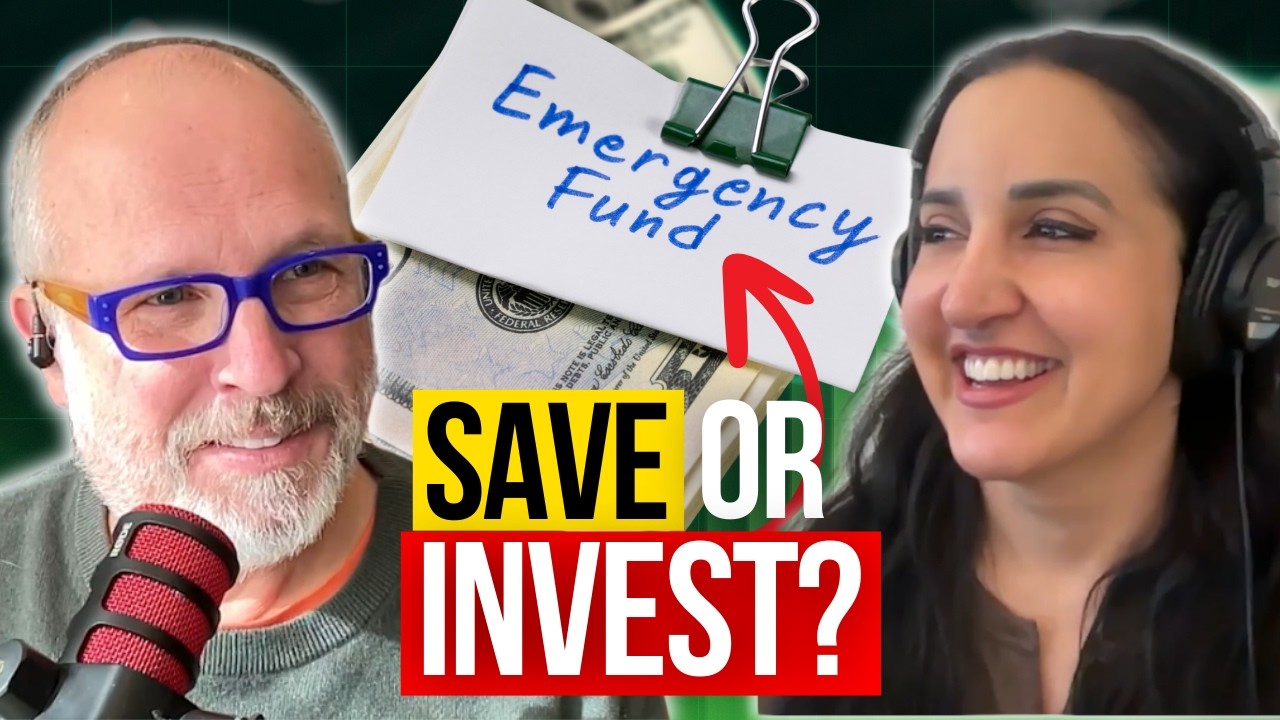
Should Your Emergency Fund Be Invested?
Hosted by Paula Pant
- Views
- 3K0.6× the show's usual
- Length
- 53mshow usual ~1h 04m
- Participants
- 1
- Topics
- 4
Summary
Description
Should your emergency fund chase yields, or should you prioritize stability over returns? It's a question we haven't had to ask for years—but as interest rates drop, savers are facing a new reality. In this Q&A episode, we tackle four listener questions that span the practical and the philosophical. We start with a listener wondering whether to chase higher yields by moving their emergency fund into bond funds or CD ladders, now that high-yield savings rates are declining. From there, we help a Canadian listener decide whether dimensional funds are worth the extra complexity and cost, then dive into bridge loans for homebuyers who need to buy before they sell. We close with a follow-up from Nick, who previously asked about investing for his nephew—he's back to share how he implemented our advice and to ask a new question that gets at the heart of work-life balance: do you stay in a high-paying job that drains you, or take a pay cut for something that gives you more life? Chapters: (0:00) Introduction (1:55) Jeremy's Question: Emergency funds and declining yields (3:25) How to determine the right emergency fund size (8:00) Why emergency funds should stay liquid, not in bonds (12:16) T-Bill and Chill strategy for extended savings (18:38) Celine's Question: Dimensional funds and career decisions (25:00) Are dimensional funds worth the higher expense ratios? (32:00) Trading income for quality of life: Running the numbers (41:43) John's Question: Bridge loans for homebuyers (49:01) Nick's Follow-up: Implementing advice and career change Listener Questions in This Episode Jeremy asks: My emergency fund is in a high-yield savings account, but with the Fed cutting rates, yields are dropping. Should I move it into a bond fund or create a CD ladder to squeeze out an extra percent or two? Or should emergency funds stay in cash? Also, a recent guest said to save 12 months of expenses—I'm only at 3 months. Is 12 months really necessary? Anonymous "Celine" asks (from Canada): I've built a complex portfolio following the efficient frontier, including dimensional funds. Should I keep using dimensional funds given their higher expense ratios? And separately, I'm burned out at my job—should I take a significant pay cut to work part-time and have more life, even though it means delaying FIRE? Anonymous "John" asks: What are the pros and cons of bridge loans when buying a new home before selling your current one? They seem like a good way to avoid contingent offers, but I rarely hear them discussed—am I missing major downsides? Nick asks (follow-up from Episode 637): I opened a brokerage account for my nephew as you suggested, with him as beneficiary. My plan is to make monthly contributions and eventually transfer shares to him via in-kind gifts. But here's my new question: I'm considering leaving my stable corporate job for something with more purpose but less pay—how do I think through this trade-off? Key Takeaways Emergency funds should stay in high-yield savings accounts, not bonds or CD ladders—the purpose of an emergency fund is liquidity and stability, not maximizing returns, and bond funds can lose principal value when you need access to cash most. The right emergency fund size depends on both risk tolerance (psychological comfort) and risk capacity (your actual situation)—dual-income households need less than single earners, and workers in high-demand fields like healthcare need less than those in volatile industries. Dimensional funds' factor tilts (small cap, value) haven't consistently outperformed simple market-cap-weighted index funds over the past decade, making their higher expense ratios (0.27-0.33% vs 0.06-0.11%) hard to justify unless you have strong conviction in factor investing. Bridge loans are expensive and risky because they create a hard deadline to sell your current home—if you don't sell in time, you face foreclosure or must refinance at potentially terrible rates, making them a last resort rather than a standard tool. When considering a career change that trades income for quality of life, run the numbers on how it affects your FIRE timeline, but also recognize that your 40s, 50s, and 60s matter just as much as your theoretical retirement years—optimizing only for future freedom can mean sacrificing present fulfillment. Resources: AA684 Cullen Roche part 1 - https://youtu.be/6H-0J4iDlOg - affordanything.com/episode684 AA637 Q&A (Nick’s first question) - affordanything.com/episode637 Affordanything.com/newsletter - affordanything.com/newsletter _______________ Subscribe via Apple Podcasts: https://affordanything.com/applepodcasts Full show notes for the episode: https://affordanything.com/episode696 Get our show notes in your inbox: https://affordanything.com/shownotes Follow us! IG: https://instagram.com/paulapant Twitter: https://twitter.com/affordanything FB: https://facebook.com/affordanything Community: https://affordanything.com/community
Covered · Topics
What was discussed
Related
Talks about similar things

BOLD PREDICTION for India Stock Market 2026 | SIP, War & Retirement | Karan Dutta | FWS 119
Finance With SharanMay 29, 2026
2 shared topics

A ₹2.28L Cr AMC CEO on India's New Economy & How You Should Renew Your Investment Right Now | FWS115
Finance With SharanMay 13, 2026
2 shared topics

Stock Expert: Becoming Rich Is Simple, But You Won’t Do It!
The Diary of a CEOApr 30, 2026
2 shared topics

Financially Free at 35: The Salary-to-Wealth Roadmap Anyone Can Follow | Vinny Arora | FWS110
Finance With SharanApr 18, 2026
2 shared topics

Where I’d Put Cash If I Needed It in 36 Months
Afford Anything PodcastMar 31, 2026
2 shared topics