Loading
a16z · September 30, 2025
Building an AI Physicist: ChatGPT Co-Creator’s Next Venture

- Views
- —
- Length
- 52mshow usual ~48m
- Participants
- 3
- Topics
- 0
Featured · Guests
Who appeared
Summary
Description
Scaling laws took us from GPT-1 to GPT-5 Pro. But in order to crack physics, we’ll need a different approach. In this episode, a16z General Partner Anjney Midha talks to Liam Fedus, former VP of post-training research and co-creator of ChatGPT at OpenAI, and Ekin Dogus Cubuk, former head of materials science and chemistry research at Google DeepMind, on their new startup Periodic Labs and their plan to automate discovery in the hard sciences. 00:00 Introduction 02:17 The Role of LLMs in Physics and Chemistry Research 03:53 What is Periodic Labs? 05:25 The Importance of Experimentation 07:44 Challenges and Goals in Physics Research 14:45 Building the Team 17:29 Scaling Laws and Physical Verification 22:36 Focus on Superconductivity 25:33 Creating a Repeatable Process for ML Systems 26:08 Balancing Commercial Viability and Scientific Goals 27:39 Periodic's Mission and Industry Applications 28:49 Integrating Diverse Expertise in the Team 29:52 Teaching LLMs to Reason in Physics and Chemistry 31:29 The Importance of Collaboration and Learning 35:38 Deploying AI in Traditional Industries 41:03 Mid Training and Its Impact on Model Performance 45:21 Collaboration with Academia and Future Directions 49:49 What Makes a Great Researcher at Periodic? Follow Liam on X: https://x.com/LiamFedus Follow Dogus on X: https://x.com/ekindogus Learn more about Periodic: https://periodic.com/
Related
More with these guests
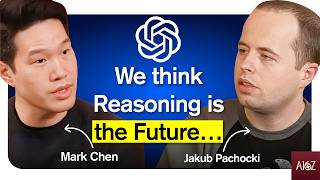
From Vibe Coding to Vibe Researching: OpenAI’s Mark Chen and Jakub Pachocki
a16zSep 25, 2025
AM

Google DeepMind Lead Researchers on Genie 3 & the Future of World-Building
a16zAug 16, 2025
AM

The Current Reality of American AI Policy: From ‘Pause AI’ to ‘Build’
a16zAug 15, 2025
AM

Beyond Leaderboards: LMArena’s Mission to Make AI Reliable
a16zMay 29, 2025
AM

Rick Rubin: Vibe Coding is the Punk Rock of Software
a16zMay 28, 2025
AM