Loading
a16z · August 14, 2025
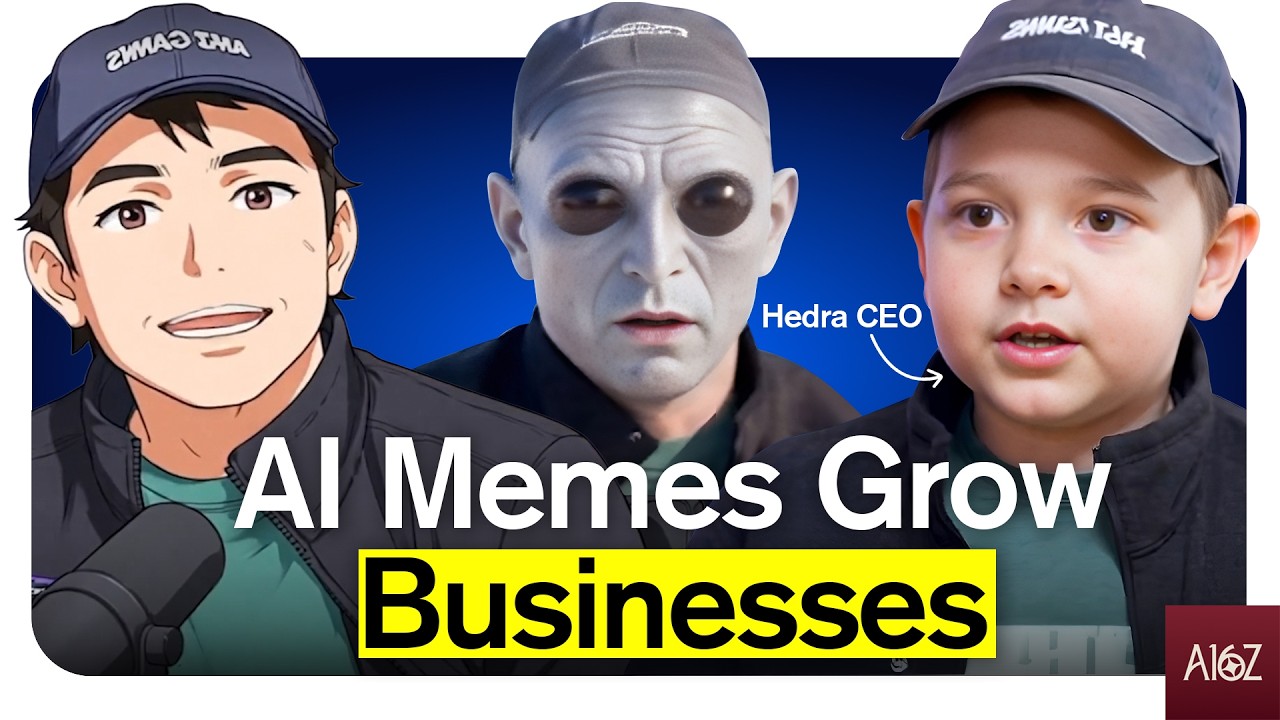
Why AI Characters & Virtual Influencers Are the Next Frontier in Video ft Hedra’s Michael Lingelbach
- Views
- —
- Length
- 47mshow usual ~48m
- Participants
- 3
- Topics
- 0
Featured · Guests
Who appeared
Summary
Description
In this episode, a16z partners, Justine Moore and Matt Bornstein are joined by Michael Lingelbach, founder and CEO of Hedra, to unpack how generative video is evolving, and why the future of AI characters may look more like interactive co-stars than static clips. They cover: - How Hedra went from viral memes and talking babies to powering enterprise video at scale - The rise of virtual influencers and autonomous digital personas - Why Hedra’s “character-first” approach is different from traditional video models - The technical and UX challenges of making AI feel truly alive — from voice cloning to interactive emotions - How real-time generative video could reshape customer support, education, and news - The founder’s journey: building at breakneck speed, staying close to users, and leading by example - Where the next wave of AI-native content creation is headed — and why prompt-to-video may soon feel outdated Along the way, they discuss creative edge cases (talking trash cans, penguin avatars), the tension between control and automation in multi-modal models, and what it takes to build a team that ships AI products at high velocity. Timecodes: 0:00 Intro 0:33 From memes to enterprise: Hedra’s viral growth story 2:11 Why creators and influencers use Hedra 5:05 Virtual influencers and fabricated personas 8:05 The challenge of multi-frame, multi-modal generation 9:47 “Character-first” video models and subject-level control 12:20 Building an integrated generative media platform 15:21 Deep niches, high quality bars, and programmable personas 17:32 Will AI characters be powered by a single model? 19:09 Control vs. prompt adherence in video 21:49 The future of interactive video 22:24 Real AI actors and LLM personality gaps 23:55 Audio generation as an untapped frontier 25:13 Why video AI is still early 26:40 Emotional attachment in human–AI interactions 27:35 What characters users connect with — human, animated, or fantastical 28:50 Unified models and creative experimentation 30:12 AI-native experiences in enterprise 31:05 Local news, personalization at scale, and medium-cohort content 33:23 Interest-based communities and creator empowerment 34:24 Lowering the barrier to being “on camera” 35:33 Founder realities: type two fun and sleepless nights 38:12 Why Michael still codes — and how prototypes shape product vision 40:35 Building trust and alignment with the team 43:13 Moving beyond text-to-video toward narrative co-creation 44:20 Staying close to users and scaling support 45:08 AI assistants for founder productivity 46:00 Michael’s sci-fi must-reads and why Star Trek still matters Resources: Check out Hedra: https://www.hedra.com/ Find Michael on X: https://x.com/mjlbach Follow Justine on X: https://x.com/venturetwins Follow Matt on X: https://x.com/bornsteinmatt Stay Updated: Let us know what you think: https://ratethispodcast.com/a16z Find a16z on X: https://x.com/a16z Find a16z on LinkedIn: https://www.linkedin.com/company/a16z Subscribe on your favorite podcast app: https://a16z.simplecast.com/ Follow our host: https://x.com/eriktorenberg Please note that the content here is for informational purposes only; should NOT be taken as legal, business, tax, or investment advice or be used to evaluate any investment or security; and is not directed at any investors or potential investors in any a16z fund. a16z and its affiliates may maintain investments in the companies discussed. For more details, please see a16z.com/disclosures.
Related
More with these guests

Where does consumer AI stand at the end of 2025?
a16zDec 29, 2025
JM

The Chip That Could Unlock AGI.
a16zDec 8, 2025
MB

The Death of Search: How Shopping Will Work In The Age of AI
a16zSep 17, 2025
JM

Google DeepMind Lead Researchers on Genie 3 & the Future of World-Building
a16zAug 16, 2025
JM

The Future of Software Development - Vibe Coding, Prompt Engineering & AI Assistants
a16zJul 21, 2025
MB