Loading
The DemystifySci Podcast · February 7, 2022
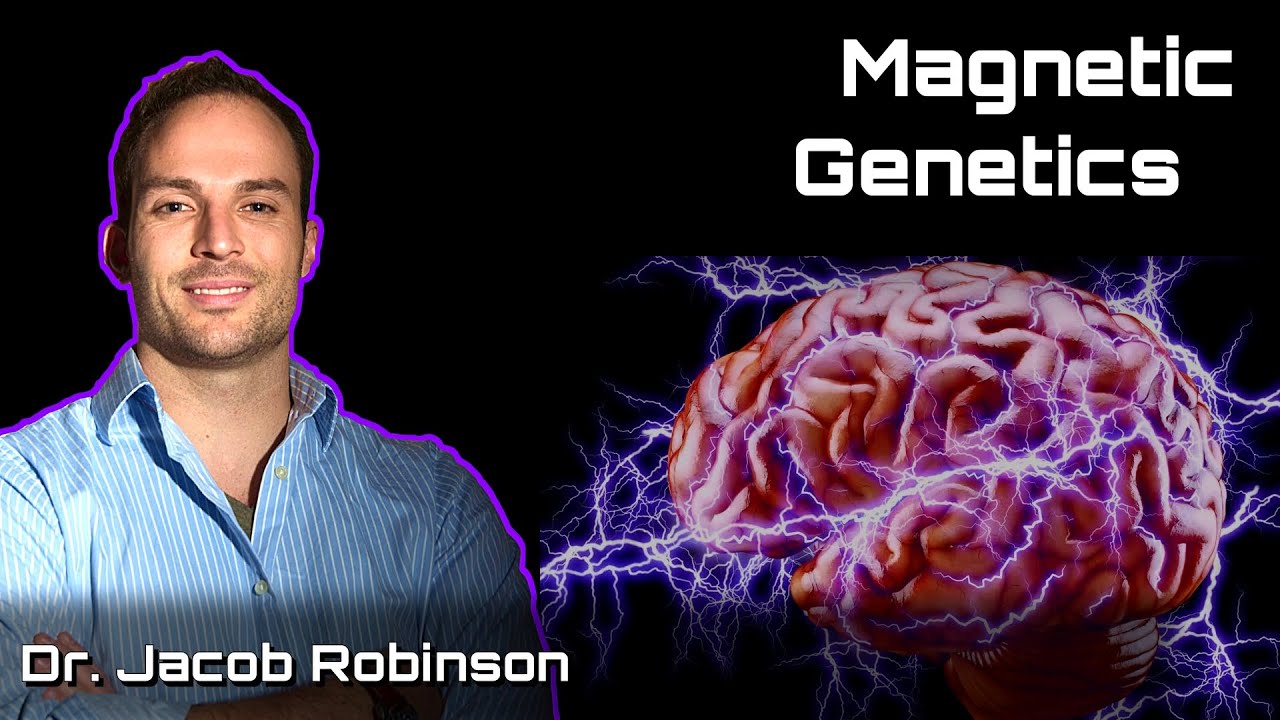
Magnetogenetics - Dr. Jacob Robinson, Rice U.
- Views
- —
- Length
- 1h 11mshow usual ~2h 01m
- Participants
- 1
- Topics
- 0
Featured · Guests
Who appeared
Summary
Description
What does the future of medicine look like? Precision, precision, precision. In the last few decades, neuroengineers have largely relied on optogenetics to achieve single neuron precision, but widespread application in the clinical setting has been hindered by the fact that to get the tech to work you have to have a light in the brain. Which is... invasive, to say the least. Enter magnetogenetics, the next generation of precision neuromedicine. By engineering cells that are responsive to external magnetic fields, researchers have started to demonstrate that not only is it theoretically possible to use magnetic fields to affect the behavior of neural circuits, it will likely be a practical technology in the clinical setting in the next few decades. We talk with neuroengineer Dr. Jacob Robinson about the work his lab is doing, the state of the field, and how to escape the generator function that creates technologies that rule us, rather than the other way around. Support the podcast by becoming a Patron @DemystifySci ªº¬˚∆≤≥≤≥ https://www.patreon.com/demystifysci ≤≥≤≥∆˚¬ºª 00:00 Magnetogenetics: An introduction to the holy grail of neuroscience 00:04:33 Can Magnetogenetics provide cure to Parkinson's disease? 00:08:25 The curious case of Magnetotactic bacteria 00:12:07 Artificially infusing magnetic properties into cells 00:21:07 Giving mammalian cells magnetic properties with intrinsic ferritin 00:26:27 The Research domain controversy: Is ferritin impossible? 00:33:41 Transcranial magnetic stimulation vs Magnetogenetics 00:37:21 How long until Magnetogenetics is a standard therapy? 00:39:40 Will magnetogenetics combating depression and loneliness? 00:42:57 Neuro-ethics. Who's driving? 01:00:21 Does technology make life better or immeasurably worse? 01:05:01 Does Neural Rights require constitutional treatment? 01:05:39 What's the criteria for a "good technology"? 01:09:38 Concluding remarks #magnetogenetics #mindcontrol #magnets Dr. Robinson: https://www.robinsonlab.com/ ªº¬˚∆≤≥≤≥ Join the mailing list https://bit.ly/3v3kz2S ≤≥≤≥∆˚¬ºª Check our main channel, @DemystifyingScience for in depth-investigations: https://youtu.be/1OCL5Lq8m6s PODCAST INFO: Anastasia completed her PhD studying microbial communication at Columbia University. When not talking to brilliant people or making movies, she spends her time painting and exploring the woods. Michael Shilo also did his PhD at Columbia studying the elastic properties of molecular water. When he's not in the film studio, he's exploring sound in music. They are both freelance professors at various universities. Blog: http://demystifyingscience.com/blog Apple Podcasts: https://apple.co/3uhn7J1 Spotify: https://spoti.fi/39IDJBD RSS: https://anchor.fm/s/2be66934/podcast/rss Donate: https://bit.ly/3wkPqaD Swag: https://bit.ly/2PXdC2y SOCIAL: - Twitter: https://twitter.com/demystifysci - Discord: https://discord.gg/HXQNjTvZCb - Facebook: https://www.facebook.com/groups/demystifyingscience - Instagram: https://www.instagram.com/demystifysci/