Loading
The DemystifySci Podcast · June 20, 2022
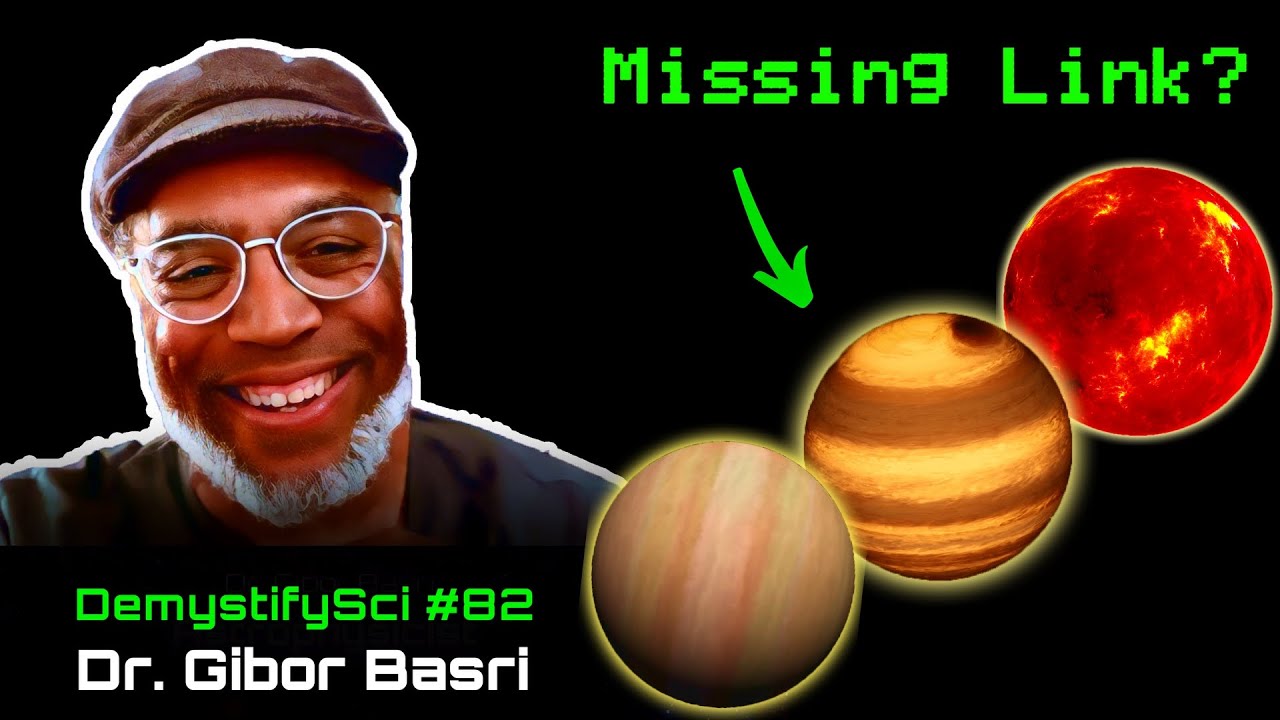
The Crumbling Line Between Planets and Stars - Dr. Gibor Basri, Astrophysicist U.C. Berkeley
- Views
- —
- Length
- 1h 33mshow usual ~2h 01m
- Participants
- 1
- Topics
- 0
Featured · Guests
Who appeared
Summary
Description
Support the scientific revolution: https://bit.ly/3lcAasB Before we can get to the strange phenomena of deuterium and lithium fusing brown dwarves, we have to cover some basics. How do you tell the difference between a planet and a star? Is it their formation, their location, or something else entirely? According to UC Berkeley professor Gibor Basri, the answer is fuzzier than you would expect. Getting to the bottom of it requires us to take a trip into the dark, cool reaches of our galaxy. There, in the dark arms of our Milky Way, stars and planets alike are being formed in the safety of secluded nebular nurseries. There, we discover that star formation, often spoken of as an exclusively gravitational process, is midwifed by chemistry, electricity, and magnetism. There we can find out how the darkness gives birth to light. Paper mentioned by Christopoulos: 111 years of magic are enough: let us return to science now https://www.researchgate.net/publication/309576615_111_years_of_Magic_are_enough_Let_us_return_to_Science_now #astronomy #astrophysics #paradigmshift 00:00 Go! 00:03:06 What delineates planets from stars? 00:05:48 Planets have to clear their orbital paths? 00:07:46 Why bother to kick Pluto out of the planet club? 00:09:43 Binary stars 00:11:22 Defining stars by how they're made 00:12:34 How to make a star? 00:14:11 How can a ball of gas fall into itself? 00:18:07 Chemistry in star formation 00:23:04 Galaxy and star formation similarities 00:26:25 Can the same ball of gas form plants, suns, and rogues? 00:27:35 More than gravitational collapse 00:31:02 Electromagnetism in star formation 00:33:11 Feedback loops in star formation 00:35:33 The role of culture in understanding star formation 00:40:10 Astrophysics affects society in subtle ways 00:42:17 What if the Big Bang fell? 00:47:37 How do we know about neutron stars? 00:52:22 When do stars start to glow? 01:01:40 Alternatives to the Big Bang 01:04:06 Defining "Time" 01:13:20 Evidence for time dilation 01:19:16 Math vs. physics 01:22:43 Einstein on "Aether" 01:26:36 Materials are mostly empty space 01:28:04 Effective solid vs. true solid Check our short-films channel, @DemystifySci: https://www.youtube.com/c/DemystifyingScience Join our mailing list https://bit.ly/3v3kz2S PODCAST INFO: Anastasia completed her PhD studying microbial communication at Columbia University. When not talking to brilliant people or making movies, she spends her time painting and exploring the woods. Michael Shilo also did his PhD at Columbia studying the elastic properties of molecular water. When he's not in the film studio, he's exploring sound in music. They are both freelance professors at various universities. - Blog: http://DemystifySci.com/blog - RSS: https://anchor.fm/s/2be66934/podcast/rss - Donate: https://bit.ly/3wkPqaD - Swag: https://bit.ly/2PXdC2y SOCIAL: - Discord: https://discord.gg/MJzKT8CQub - Facebook: https://www.facebook.com/groups/DemystifySci - Instagram: https://www.instagram.com/DemystifySci/ - Twitter: https://twitter.com/DemystifySci MUSIC: -Shilo Delay: https://g.co/kgs/oty671